Homes
Popular Cities


Homes

We’ve received your message and one of our team members will get back to you shortly.

Updated November 2026
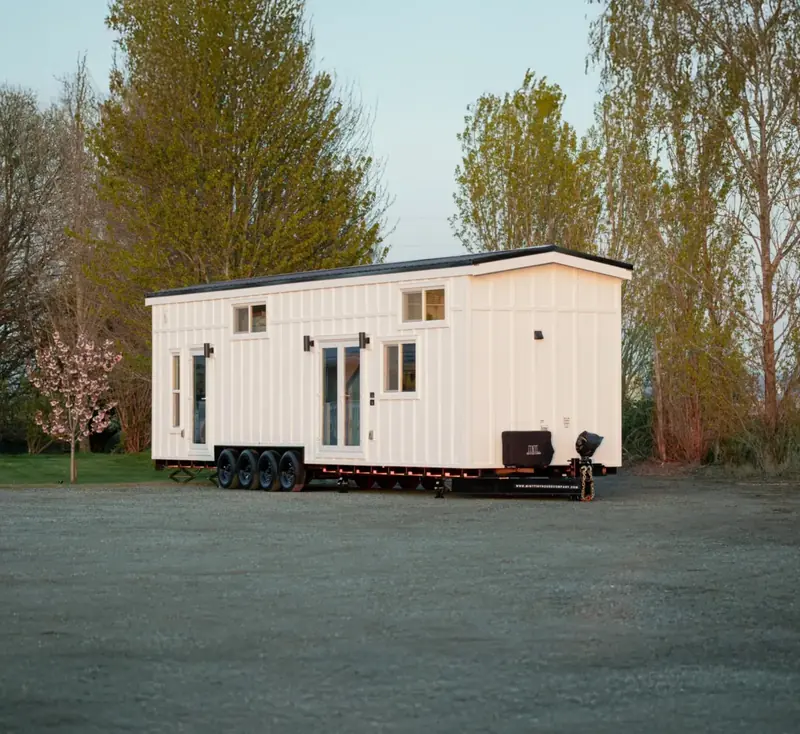
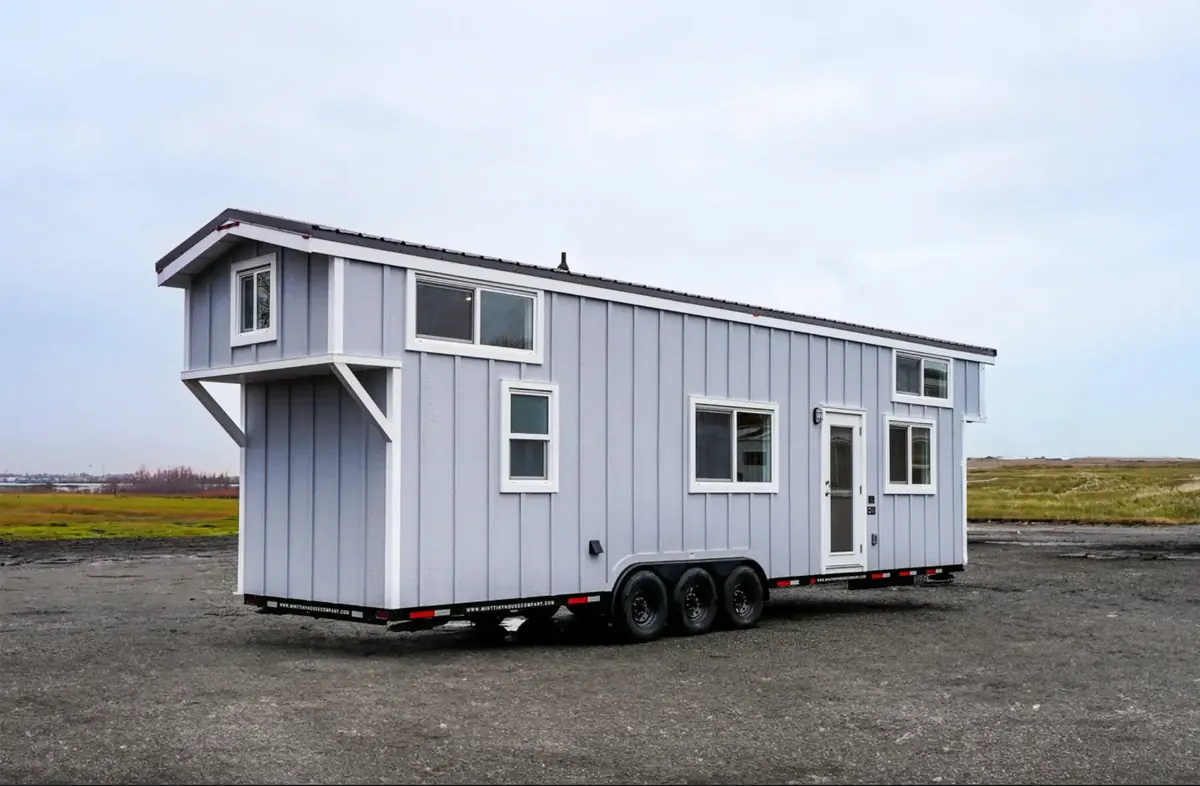
Mint Tiny House builds tiny houses on wheels, park models and modular homes in Delta, British Columbia, and has been doing it since 2014. They describe themselves as one of North America's largest tiny house RV and park model manufacturers, and the range backs that up: twelve published models from 236 to 528 square feet, shipped across the United States and Canada.
Every model sits on a trailer chassis with a wood frame above it. What changes across the range is the certification, and that is the one thing worth understanding before you shop, because it decides where the home is allowed to go. Here is the lineup, the prices, and what that certification means.
Here is the whole catalog, smallest to largest, in US dollars except where noted. These are starting prices, and Mint notes that the final figure moves with taxes, exchange rates and production costs.
The Selkirk is the one model Mint prices in Canadian dollars only, at $199,750 CAD plus tax, so it is the one figure in that list not converted. The Hartley and the Tofino are the modular line, built to CSA A277 and certified for placement in Canada. Everything else is a tiny house RV or a park model.
Across the models that carry a US price the catalog averages about $339 a square foot. The Onyx is the outlier at $481, which is what happens when you put a full kitchen and bathroom into 257 square feet. Everything from the Ruby upward sits between $296 and $379.
Three models share the largest footprint in the range, and they are priced differently.
Same square footage, roughly $14,508 between the cheapest and the priciest. You are not buying more space. You are buying a different classification, and that is the thing that decides whether the home can sit on a residential lot or belongs in a park. If you take one idea away from this page, take that one.
Here is what that money actually buys. The Orca is a park model. The Hartley and the Tofino are modular homes built to CSA A277, the Canadian standard for factory-built buildings, which Mint says meets or exceeds most provincial building codes. A park model is certified as a park model. A CSA A277 home is certified against a building code, which is a different and generally easier conversation with a planning department. Mint certifies both modular models for placement in Canada, so for a US buyer the Orca is the one in this group to ask about.
Mint builds to three standards across the range, one per line, and which one your model carries is the single most useful thing to know before you shop.
On the tiny house side, Mint states that their tiny house RVs are certified as recreational vehicles, to RVIA NFPA 1192 in the United States and CSA Z240 RV in Canada. A home certified as an RV is treated as an RV, which means the rules that apply to it are your county's rules for parking a recreational vehicle. Those vary a lot from one county to the next, so that is a local question rather than a Mint question.
On the park model side it is different. The Ventura page lists ANSI A119.5 for the United States and CSA Z241 for Canada, which are the park model standards rather than the RV ones. The practical difference shows up in the build: Mint notes that US Venturas can have two sleeping lofts while Canadian ones get a single loft rated for storage only, because the certifications differ on what a loft may be used for.
Mint says both Intertek and RVIA inspect its units, that they carry Transport Canada National Safety Marking approval for road use, and that they are registered with the National Highway Traffic Safety Administration in the United States. For a home you intend to tow, that paperwork is the part that matters.
Then there is the modular line, which works differently from the other two and is the one most worth understanding. The Hartley and the Tofino are built to CSA A277, the Canadian standard for factory certification of factory-built buildings, and Mint says the Hartley meets or exceeds most provincial building codes across Canada. Their modular pages add that these homes are built to meet BC building codes the same way a site-built house is. That is a building code rather than a vehicle standard, and it is the same standard Hewing Haus builds to. Mint certifies both modular models for placement in Canada.
So the practical shape of it is this. The RV and park model standards are vehicle standards, and a home built to one of them is placed under your county's rules for recreational vehicles or park models. CSA A277 is a building code pathway, which is usually the easier one for a permanent spot on residential land. Neither is better built; they are certified for different places to sit. Before you put money down, call your county or municipal planning office, tell them the exact certification on the model you want, and ask what they allow and for how long. Our guide on park models versus tiny homes on wheels walks through how the classifications differ, and how to evaluate land before you buy covers the site and zoning side.
If you asked us over coffee, we would say the Ruby. At 386 square feet it is $301 a square foot, the best rate in the range outside the two largest models, and the loft layout buys you sleeping space without paying for more footprint. It suits a rental, a guest house or one or two people living full time.
The STR 30 is the one to look at if the plan is short term rental, which is what it was designed around. The Everest and Arctic are the same 392 square feet at the same price and differ on layout, so pull both floor plans up rather than choosing on the number. And if you want the largest footprint, the 528 sq ft section above matters more than the price does.
Ruby · 386 sq ft · 34' long · $116,220 · Loft Edition. Our pick of the range, and the best rate per square foot outside the two largest models. Full specifications.
STR 26 · 236 sq ft · 26' long · $82,212. The smallest model and the cheapest way into the range, though not the best rate per square foot. Full specifications.
STR 30 · 250 sq ft · 30' long · $94,692. Built with short term rentals in mind, which is where the name comes from. Full specifications.
Onyx · 257 sq ft · 30' long · $123,552. The most expensive per square foot in the catalog, and the one to compare carefully against the STR 30, which is nearly the same length. Full specifications.
Everest and Arctic · 392 sq ft each · 41' long · $128,232 · Canada Goose Edition. Same size, same price, two layouts. Everest specifications and Arctic specifications.
Ventura · 400 sq ft · 40' long · $119,750. The entry point to the park model line, and the model whose page sets out the certification difference most clearly. Full specifications.
Orca · 528 sq ft · 44' long · $156,312 · Park Model Canada Edition. The largest footprint in the range and the best rate per square foot in the catalog. Full specifications.
Mint covers a lot of ground on its own, and there are a few other builders worth putting next to them depending on what you are after.
Hewing Haus builds to CSA A277 too, the same standard as Mint's modular line, on a permanent foundation. The difference that matters is reach: Mint certifies its modular models for Canada, so a US buyer who wants the building code route rather than a vehicle standard should price Hewing Haus. Mint is the one to price if mobility matters, or if a trailer chassis suits where the home is going. Our Hewing Haus guide covers their lineup the same way this one does.
Zook Cabins builds in Pennsylvania and does both RVIA park models and state certified modular cabins, so they are worth a look if you are placing in the eastern United States or want a cabin look rather than a contemporary one. Mint holds the edge on published pricing across the whole range.
Boxabl is built around volume manufacturing and a folding shipping format, so they suit a buyer who wants the simplest possible delivery. Mint is the better fit if you want a choice of layouts and a builder who has been shipping the same lines for years.
Mint sets its purchase terms out plainly, and they are worth reading before you get attached to a model.
The question to ask before you sign anything is what happens to that retainer if your site or your permit falls through. The classification work described above can take longer than you expect, and the retainer goes in first.
Ask about the currency too. The price is set in Canadian dollars and Mint says it can move with the exchange rate, so find out whether your contract is in Canadian or US dollars and at what point your number is locked.
Mint publishes the price of the home. As with every builder in this category, the project is more than the home, and these are the lines worth putting in the budget from day one.
Our guide on what really matters when comparing home models walks through holding two quotes side by side.
If you want to stand in one first, Mint says it does not do viewings at the factory but will show a finished home at a separate location by appointment, and that O'Connor RV in Chilliwack, British Columbia now carries their homes. Worth the trip if you are anywhere near the lower mainland, because 236 square feet reads very differently in person.
Have a wander through the Mint Tiny House listings for specifications, floor plans and photography, or widen out across tiny homes on wheels and park models, or browse everything we list. In Colorado you can also see what is around Denver and Fort Collins.
We think so, particularly through the middle of the range. The catalog is wide for a builder this size, every model carries a published price, and the range covers RV certified tiny houses, park models and CSA A277 modular homes, so one builder can serve three quite different plans.
The thing to settle first is certification, because it decides where the home can go.
Starting prices run from $82,212 for the 236 sq ft STR 26 up to $170,820 for the 528 sq ft Tofino, in US dollars, which works out to about $339 a square foot across the range.
Those are starting prices for the home. Delivery, the pad, services, set up and permits are separate, and the figure moves with the exchange rate.
Both, plus a third line. Mint runs three product lines and each carries its own standard, so the answer depends on which model you are looking at.
The first two are vehicle standards and the third is a building code pathway, which is what decides where each one can sit.
In Delta, British Columbia, and they ship across the United States and Canada.
Because the homes are built in Canada and priced in Canadian dollars, a US buyer's final number moves with the exchange rate.
Yes, but not with a mortgage. Mint says a tiny house on wheels qualifies for an RV loan rather than a traditional mortgage, which follows from the home being certified as a recreational vehicle.
Settle the classification question first. The financing conversation follows from it.
A $25,000 CAD retainer, which Mint says is non-refundable and which comes off your first payment. After that the balance is paid in thirds.
Ask what happens to the retainer if your site or permit does not come through, because it goes in before any of that is settled.
Yes. Mint builds the Hartley to CSA A277, the Canadian standard for factory certification of factory-built buildings, and says it meets or exceeds most provincial building codes across Canada. The Tofino is the same.
If you are placing in Canada and want a permanent spot rather than a park, the modular line is the part of the range to look at.
The STR 26, at 236 square feet on a 26 foot trailer. Nothing smaller appears in the published catalog.
The STR 26 is the least expensive way into the range and still not the best rate per square foot, as the pricing list above shows.