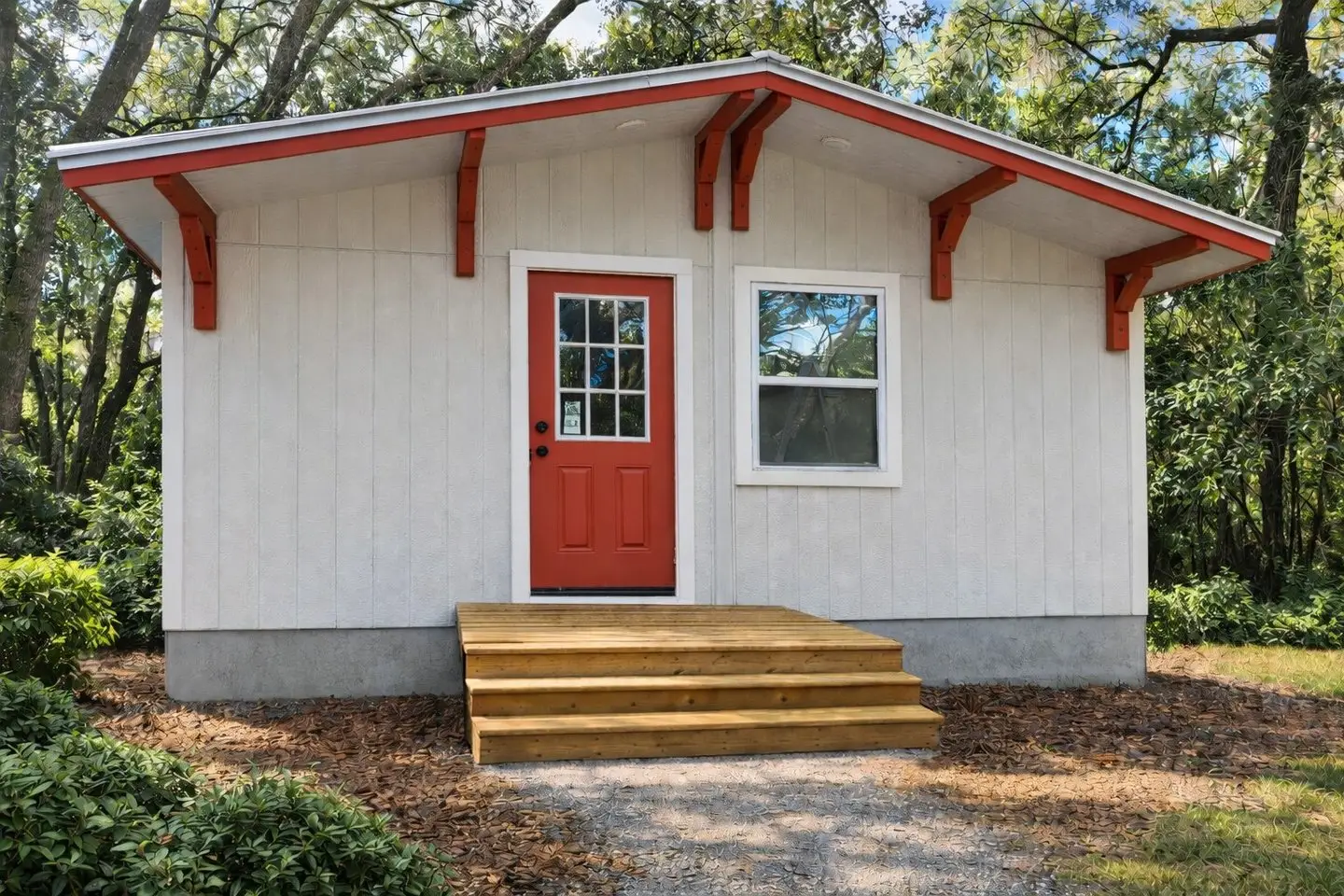
Simplifying the Search for Modular and Prefab Homes
Simplifying the Search for Modular and Prefab Homes
all
read-time
A New Era in Housing
In today’s market, more people are embracing modular homes, tiny houses, container homes, and eco-friendly prefab options as smart, flexible, and affordable living solutions. These modern housing choices reflect a shift toward efficiency, sustainability, and customization but finding the right one can still be a challenge.
The Problem: Scattered Information and Frustrating Searches
For most buyers, exploring alternative housing means bouncing between dozens of builder websites, incomplete listings, and outdated information. It’s time-consuming and often confusing, especially for those new to modular or prefab living.
Without a centralized source, it’s difficult to:
Compare models and prices side by side
Confirm which builders are legitimate and reliable
Understand which homes meet local codes or fit specific land requirements
The Solution: One Trusted, Centralized Platform
That’s why a single, reliable platform that brings everything together matters so much. A unified hub empowers buyers to:
Compare prices, features, and models quickly
Connect with vetted builders and dealers they can trust
Discover housing options that fit their land, lifestyle, and budget
Save time and avoid the frustration of endless searches
Building a Smarter Way to Shop for Homes
At the end of the day, alternative housing deserves alternative convenience. A centralized platform doesn’t just simplify the search process it transforms it. It gives buyers confidence, clarity, and choice in a market that’s evolving faster than ever.
That’s what we’re building: a smarter, simpler way to explore, compare, and connect with the homes that fit how people truly want to live.
In today’s market, more people are embracing modular homes, tiny houses, container homes, and eco-friendly prefab options as smart, flexible, and affordable living solutions. These modern housing choices reflect a shift toward efficiency, sustainability, and customization but finding the right one can still be a challenge.
The Problem: Scattered Information and Frustrating Searches
For most buyers, exploring alternative housing means bouncing between dozens of builder websites, incomplete listings, and outdated information. It’s time-consuming and often confusing, especially for those new to modular or prefab living.
Without a centralized source, it’s difficult to:
Compare models and prices side by side
Confirm which builders are legitimate and reliable
Understand which homes meet local codes or fit specific land requirements
The Solution: One Trusted, Centralized Platform
That’s why a single, reliable platform that brings everything together matters so much. A unified hub empowers buyers to:
Compare prices, features, and models quickly
Connect with vetted builders and dealers they can trust
Discover housing options that fit their land, lifestyle, and budget
Save time and avoid the frustration of endless searches
Building a Smarter Way to Shop for Homes
At the end of the day, alternative housing deserves alternative convenience. A centralized platform doesn’t just simplify the search process it transforms it. It gives buyers confidence, clarity, and choice in a market that’s evolving faster than ever.
That’s what we’re building: a smarter, simpler way to explore, compare, and connect with the homes that fit how people truly want to live.
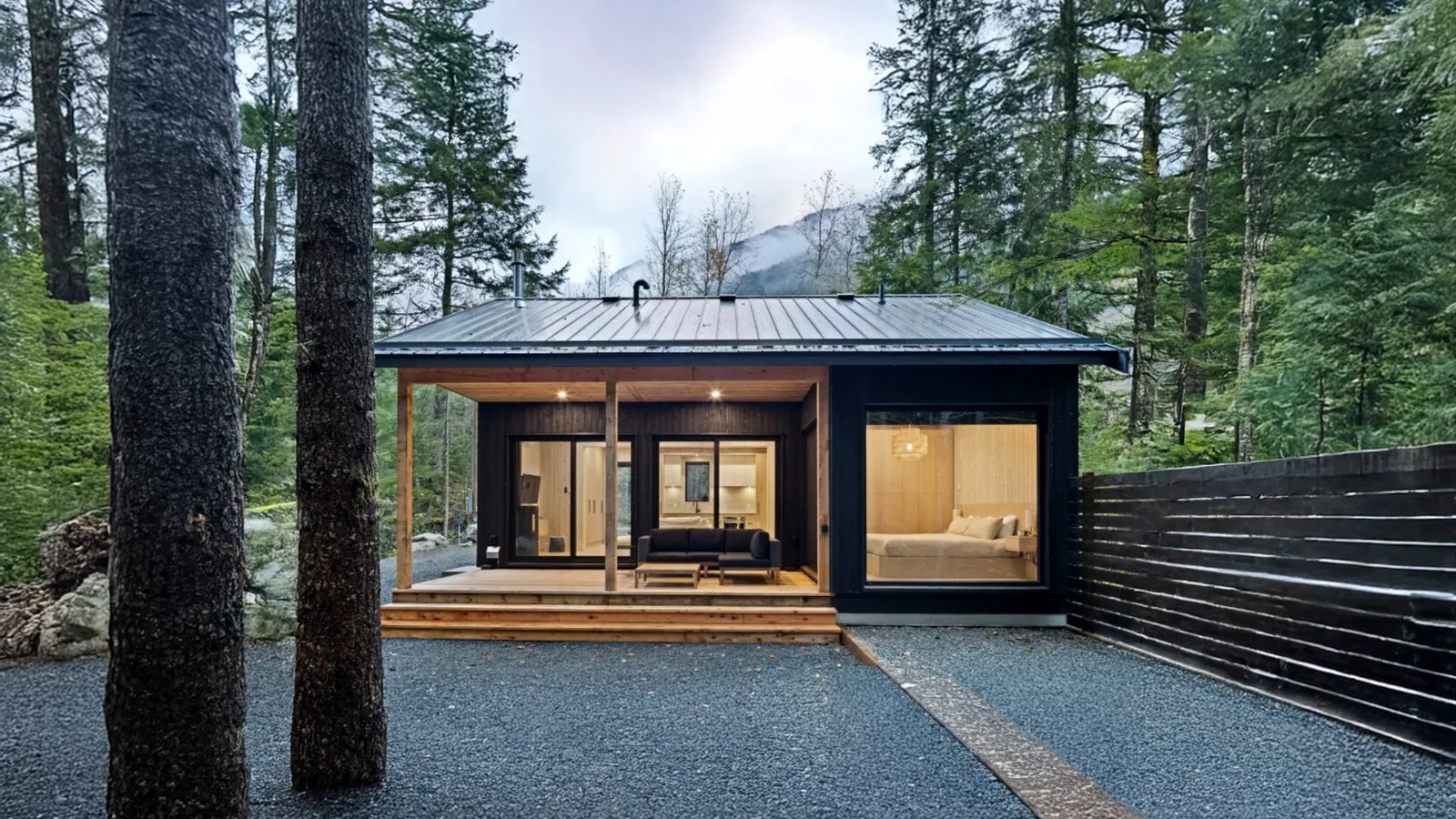
Hewing Haus builds modern prefabricated modular homes at the small end of the market: tiny homes, backyard offices and cabins for recreational property. They position themselves as a custom builder working in smaller footprints rather than a catalog operation. Their founder, Ken, spent 20 years building high-end custom homes before starting the company.
They use high quality cross-laminated timber, cedar cladding and locally sourced wood across the entire lineup, and every home is built indoors in the Fraser Valley, British Columbia. Fourteen models, 200 to 900 square feet. Here is the lineup, and how to think about which size fits.
What stands out
A published price on all 14 models
Cross-laminated timber structure, not stick framing
CSA A277 certified, built indoors and signed off before it ships
One team for permitting, design, build and install
As little as 12 weeks from purchase to delivery
A clean size ladder from 200 to 900 sq ft
Good to know before you call
One bathroom in every model, right up to the 900 sq ft homes
Certified in Canada, so a US placement starts with one call to your state
Your site, foundation, delivery and install get quoted for your specific lot
Hewing Haus at a glance
Built by: Hewing Haus, founded by Ken after 20 years building high-end custom homes
Where: handcrafted indoors in the Fraser Valley, British Columbia
Catalog: 14 published models from 200 to 900 sq ft, plus custom builds to roughly 1,800
Structure: cross-laminated timber throughout, cedar cladding, locally sourced wood
Certification: CSA A277
Lead time: as little as 12 weeks from purchase to delivery
Serves: Canada and the United States
How much does a Hewing Haus home cost?
Here is the whole catalog, smallest to largest.
Nootka 2 · 200 sq ft · $109,500 · $548 a square foot
Pender 3 · 300 sq ft · $152,000 · $507 a square foot
Quadra 4 · 400 sq ft · $182,500 · $456 a square foot
Keats 4 · 400 sq ft · $183,000 · $458 a square foot
Douglas 4 · 400 sq ft · $192,000 · $480 a square foot
Sidney 4 · 400 sq ft · $194,500 · $486 a square foot
Bowen 5 · 500 sq ft · $216,000 · $432 a square foot
Granville 6 · 600 sq ft · $253,000 · $422 a square foot
Gambier 6 · 600 sq ft · $259,500 · $433 a square foot
Saturna 7 · 700 sq ft · $292,000 · $417 a square foot
Galliano 7 · 700 sq ft · $303,500 · $434 a square foot
Copper 8 · 800 sq ft · $329,500 · $412 a square foot
Ruxton 9 · 900 sq ft · $368,000 · $409 a square foot
Texada 9 · 900 sq ft · $374,000 · $416 a square foot
They also take on custom work up to roughly 1,800 sq ft, which sits outside the published price list.
Two nice touches in there. Hewing Haus has named the models so the number is the size, which makes the lineup easy to read at a glance: a Nootka 2 is 200 square feet, a Texada 9 is 900. And the catalog sits right around $451 a square foot, running a bit higher on the smallest homes and settling in from the Granville 6 upward.
Which Hewing Haus model should you buy?
If you asked us over coffee, we would say the Granville 6. Six hundred square feet, two bedrooms, and the size where the per foot number settles down. It covers a guest house, a rental, a downsizing move or a full time home for two people without buying space you will rattle around in.
Going smaller is easy to love too. The Nootka 2 is one well resolved room and a lovely garden office or studio. If you want more living space rather than another bedroom, the Copper 8 gives you 200 more square feet to stretch into. And if you land on 400 square feet, look at all four of those models together, because they sit close on price and differ on layout, so the floor plan is really what you are choosing between.
CSA A277, and what it does for you
Building indoors is not just about staying dry. Hewing Haus is certified to CSA A277, which means an inspection body audits the factory and its quality program rather than sending someone out to your lot halfway through. Your home is checked under a roof, in controlled conditions, and signed off before it ever gets on a truck. In Canada that is the well worn path and building officials know it cold.
Buying into the United States adds one phone call to the front of the process. Each state runs its own program for factory built housing and decides what it accepts, so ring your state modular program or your county building department and ask what they want to see for a CSA A277 home. Hewing Haus serves both countries and has done this before, so ask them the same question and keep both answers together. Get it out of the way early and the rest of the project is pleasantly boring.
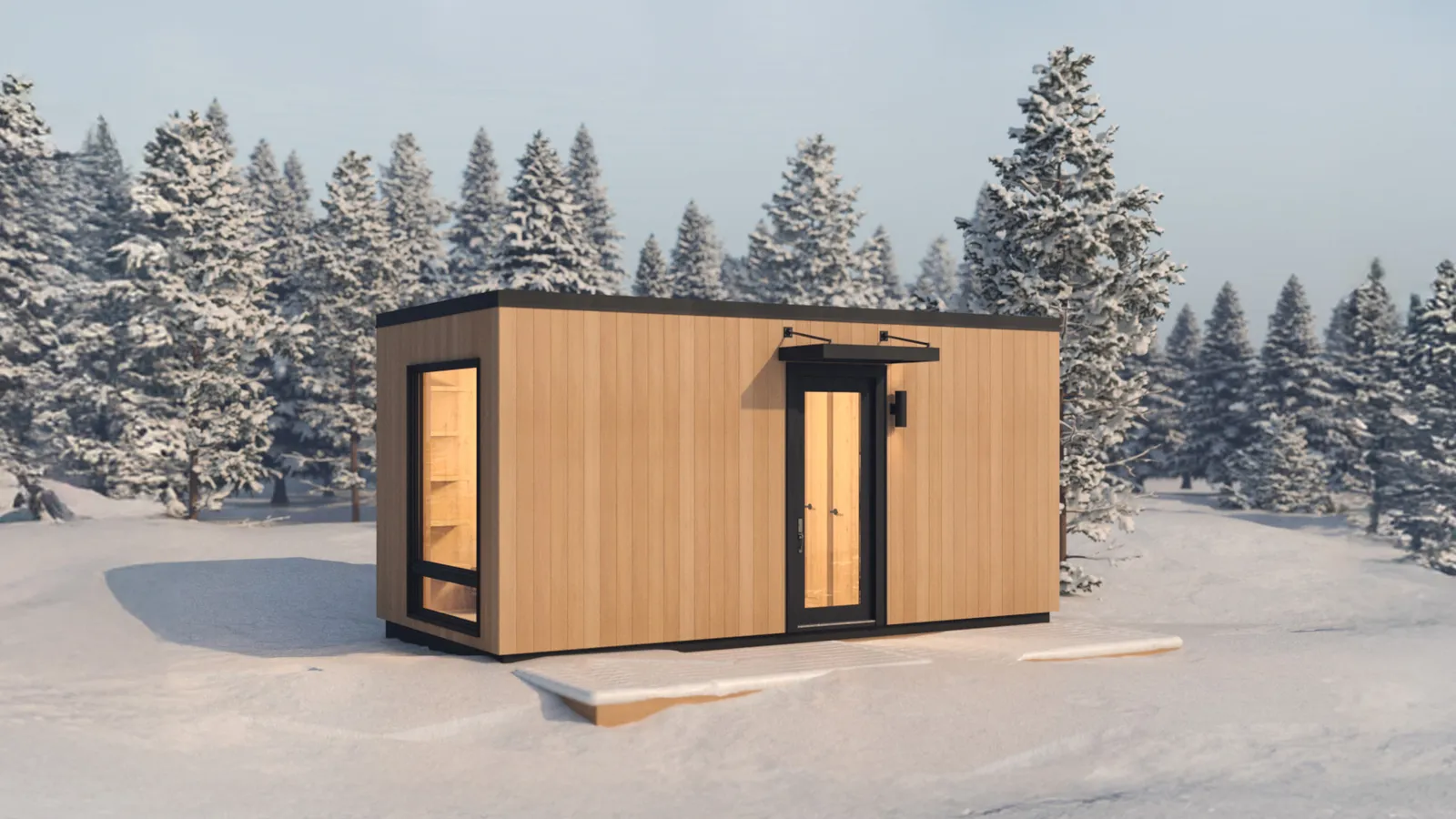
The way into the lineup, and a proper single room rather than a shrunken house. Twenty by ten, one bathroom, and it does beautiful work as a garden office, a guest space or a rental.
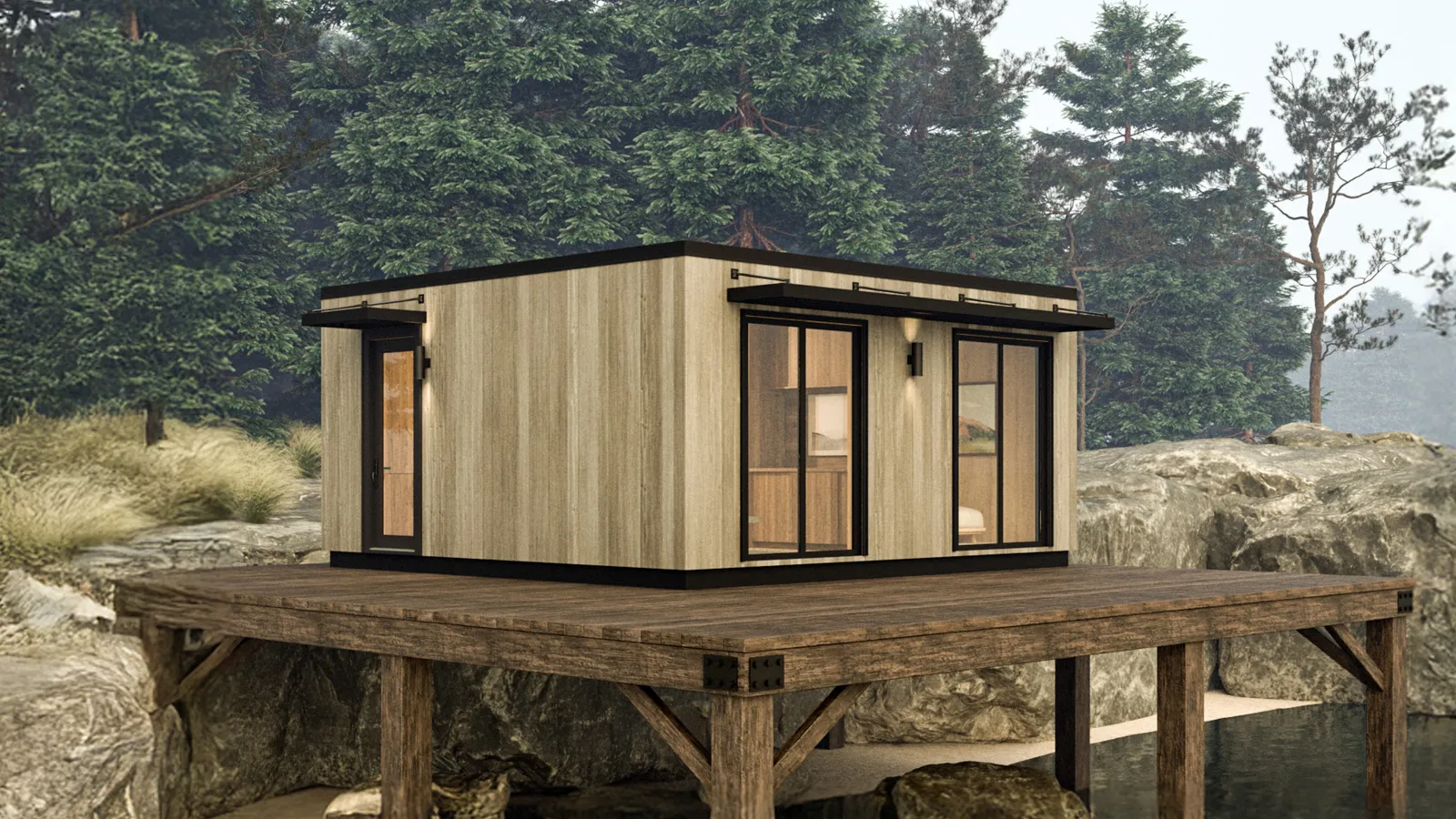
A neat 20 by 20 square with a bedroom you can close the door on, which is the first real step up from studio living. This is one of the four 400 sq ft plans, so pull them up side by side before you decide.
Pender 3 · 300 sq ft · 30' × 10' · 1 bed, 1 bath · sleeps 4 · $152,000. Long and narrow, which is exactly what you want when a side yard or a setback will not take a square building. Full specifications.
Granville 6 · 600 sq ft · 30' × 20' · 2 bed, 1 bath · sleeps 6 · $253,000. Our pick, and the smallest one here with two bedrooms. Full specifications.
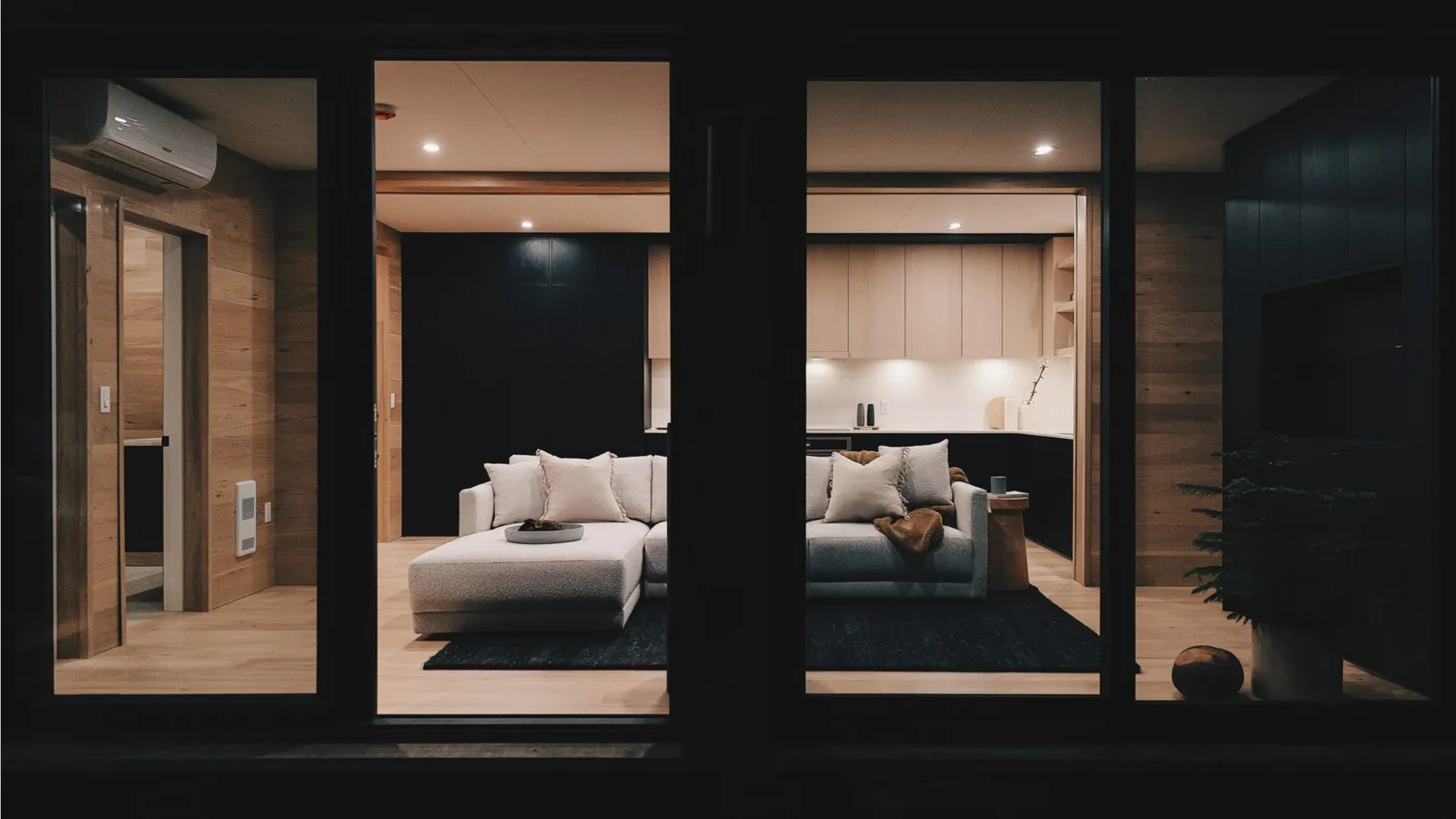
This is the one people fall for. Vaulted ceilings, two sets of eight foot sliders onto the living room and another off the primary bedroom, so the glass does most of the talking. Cedar outside, CLT floor and wall system, hardwood throughout.
One small housekeeping note on this model: the catalog lists it at $292,000 while the product page quotes a Canadian figure that does not convert to the same number. Worth confirming the price and the currency in writing before you budget around it.
The most house like of the bunch. Oversized eight by eight windows, dual sliding doors, a full kitchen and a flex second room that most people turn into an office. The extra space over the Granville goes into living room rather than another bedroom, so choose it for the volume.
Hewing Haus is a lovely fit for a lot of buyers, and there are a few other builders worth putting next to them depending on what you care about most.
Hewing Haus and Nanabode
Nanabode plays in the same backyard and ADU space and brings a broader set of plans, so they are great to look at if you want more layouts to choose from or a more contemporary look. Hewing Haus is the one to price if the structure itself matters to you, since cross-laminated timber comes as standard.
Hewing Haus and Zook Cabins
Zook Cabins builds in Pennsylvania to state certified modular standards, which makes them a natural fit if you are placing in the United States and want the certification question settled domestically, or if a cabin look appeals more than a Scandinavian one. Hewing Haus wins on published pricing and on a size ladder you can read in ten seconds.
Hewing Haus and Boxabl
Boxabl is built around volume manufacturing and a clever folding shipping format, so they are worth a look if stretching your budget as far as it will go is the priority. Hewing Haus is the better fit if you want a timber structure and one team carrying the project from permitting through installation.
What is in the price, and what sits alongside it
Hewing Haus will carry the whole project for you, permitting through install, which is more than most builders will take on. The published number is the home itself. The site side gets quoted once they know your lot, because it genuinely depends on the lot. Give these a real line in the budget from day one.
Site preparation. Clearing, grading, and a driveway that will take a truck and a crane
Foundation. Slab, piers or crawl space, engineered for your soil and climate
Site services. Water, septic or sewer, and power to the building. On raw land this is often the biggest line after the home
Delivery and installation. Distance dependent, plus crane placement and hookup
We think so, especially through the middle of the range. The structure is cross-laminated timber rather than stick framing, and one team handles permitting through installation, which takes a lot of coordination off your plate.
14 published models from 200 to 900 sq ft, custom work to roughly 1,800
CSA A277 certified, built indoors in the Fraser Valley
As little as 12 weeks from purchase to delivery
Around $451 a square foot across the catalog
Two things to have in mind as you plan: every model has a single bathroom, and a US placement starts with a call to your state.
How much does a Hewing Haus home cost?
The published catalog runs from $109,500 for the 200 sq ft Nootka 2 up to $374,000 for the 900 sq ft Texada 9, which works out to roughly $451 a square foot across the range.
Nootka 2, 200 sq ft, $109,500
Granville 6, 600 sq ft, $253,000
Copper 8, 800 sq ft, $329,500
Texada 9, 900 sq ft, $374,000
Those are home prices. Site work, foundation, services, delivery and installation get quoted for your lot.
Where are Hewing Haus homes built?
Indoors in the Fraser Valley, British Columbia, and they serve both Canada and the United States.
Founded by Ken, who spent 20 years building high-end custom homes
Cross-laminated timber structure with cedar cladding
Wood sourced from responsibly managed local forests
Building indoors is what makes the 12 week timeline possible, because weather stops being a variable.
What is CSA A277 and does it work in the United States?
CSA A277 is the Canadian certification standard for factory built construction. The factory and its quality program are audited, so each home is signed off before it leaves the building.
In Canada it is the standard route and building officials know it well
In the United States each state runs its own factory built housing program
Your state will tell you what it wants to see, and Hewing Haus has done this before
One call to your state modular program or county building department, early on, and you are set.
Can you finance a Hewing Haus home?
Usually yes, because these are certified modular homes on permanent foundations rather than vehicles, and that is the distinction most lenders care about.
Certified modular on a foundation is generally treated as real property
That opens conventional and construction financing in most places
Hewing Haus does not lend, so you bring your own lender
Settle the certification question first and the financing conversation gets much simpler.
What is the smallest Hewing Haus home?
The Nootka 2, at 200 square feet. Nothing smaller appears in the published catalog.
200 sq ft, 20 by 10 feet, a single open room with one bathroom
Next up are the Pender 3 at 300 sq ft and the four 400 sq ft models
The model number is the size, so a 2 is 200 square feet and a 9 is 900
It is the highest per foot number in the lineup and still the easiest one to fall for.
You've done the hard part: you've decided you want something small, towable, and a fraction of what a traditional home would cost. Now you're staring at two options that look almost identical from the road: park models and tiny homes on wheels.
They share the same federal RV classification. They come off similar chassis. They often come from the same manufacturers. But they're built for very different lives, and the difference matters more than most people realize until they're a year into ownership. One is designed to move. The other is designed to settle. One is built for full-time living. The other is built for the spot you've already picked.
Getting it wrong doesn't just cost money. It can lock you into zoning rules you didn't see coming, or a resale market that isn't looking for what you have. So let's walk through the real differences, with real prices from real builders on ModelTown, so you can pick the right one the first time. And if you're also weighing a permanent secondary dwelling on land you already own, our tiny home vs ADU guide is the companion piece to this one.
The short version
The real difference between a park model and a tiny home on wheels comes down to two things: width and mobility. A tiny home on wheels is 8.5 feet wide by design, narrow enough to tow down any US highway without permits. A park model is 10 to 12 feet wide, roomier inside, but wide enough that moving it means oversize-load permits, escort vehicles, and a professional crew.
Tiny homes on wheels are for people who want the option to move. Park models are for people who've picked their spot. Both are RVs under federal code, but they live very different lives.
What is a tiny home on wheels?
A tiny home on wheels is exactly what it sounds like: a real home (full kitchen, real bathroom, actual insulation, room to sleep and cook and shower) built on a trailer chassis so you can move it when you need to. Most are 150 to 400 square feet. Most sleep two to four people. Most are certified as RVs under RVIA standards, with CSA certification available if you're placing one in Canada.
What separates a tiny home on wheels from a travel trailer isn't the wheels, it's the intention. This is built to live in, not vacation in.
What they run: Entry-level builds start around $40,000. Most turnkey tiny homes on wheels land between $70,000 and $110,000, and luxury builds push past $130,000. Builders like Mint Tiny House and Tiny Mountain Houses sit squarely in the mid-to-upper range and represent the design and build quality you'd expect from a home meant to last.
Who they're for: people who want the option to move: for work, for a change of scenery, for a partner's job, for their own restlessness. First-time buyers who've been priced out of a traditional starter home. Couples testing whether the tiny life actually fits them before they commit to more. Off-grid dreamers, seasonal workers, and anyone who isn't ready to plant a flag in one specific piece of land yet.
You can browse tiny homes on wheels from vetted builders on ModelTown, and every listing gives you real specs, real photos, and a real price.
Tiny home on wheels example
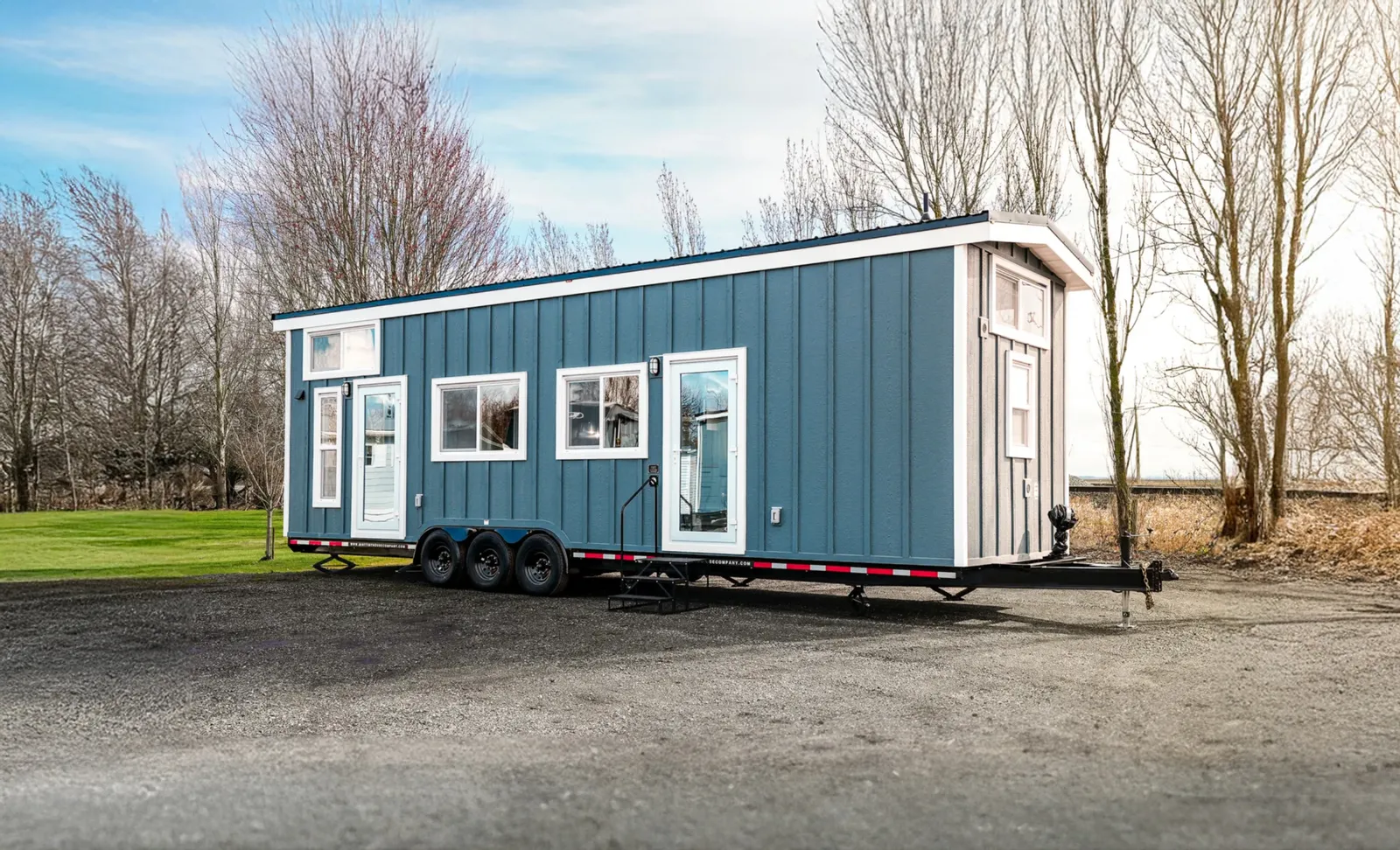
The Napa by Mint Tiny House
236 sq ft · 26' × 8.5' · RVIA + CSA certified · From $95,082
A park model is a close cousin of the tiny home on wheels, but with more room to breathe. It's an RV under federal code (officially a "park model RV," or PMRV), built to a standard called ANSI A119.5. Physically, it's usually 34 to 40 feet long and 10 to 12 feet wide, which is what gives it that more house-like feel inside. Real bedrooms instead of lofts. Full-size kitchens. Bathrooms you'd actually want to shower in every day.
Most park models are set once and left there, on skids, blocks, or a stone pad, at an RV park, a resort community, a campground, or a rural lot you own. They arrive fully finished from the factory. You hook up utilities, skirt the base, and you're home.
What they run: Park models cost between $55,000 and $130,000 for the unit itself. Most fully-finished builds land around $80,000 to $110,000. Delivery and setup add another $3,000 to $10,000 depending on how far it's coming and how easy the site is to reach.
Who they're for: snowbirds who spend winters in Phoenix or Florida and summers back home. Buyers who want a compact, comfortable full-time residence in an RV park community. Landowners with a piece of rural property who want a livable structure without going through a full traditional home permit process. And short-term rental operators who want a distinctive unit that guests will actually want to book.
Browse park models from top manufacturers on ModelTown.
Park model example
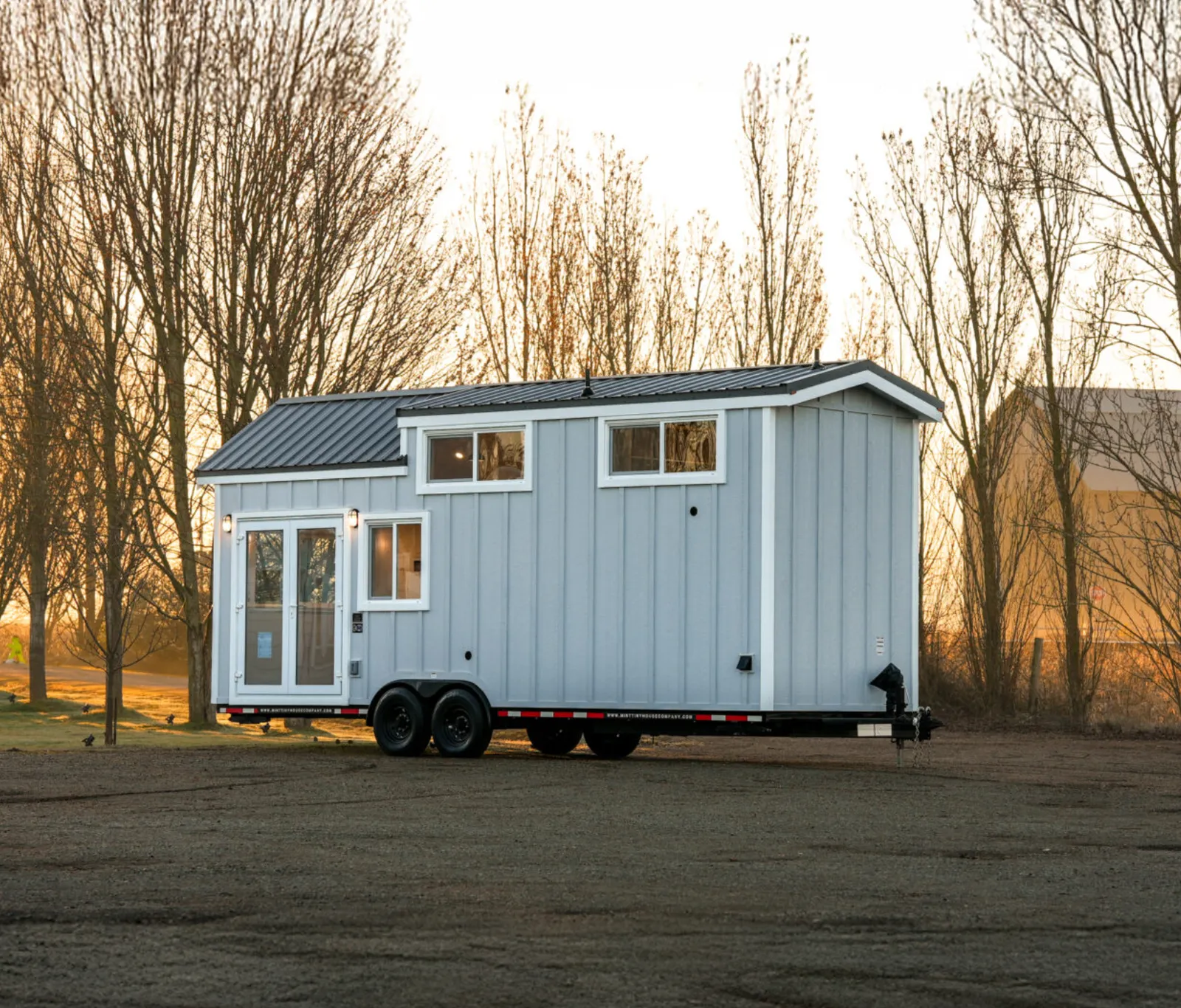
The Vashon by Mint Tiny House
340 sq ft · 34' × 10' · ANSI A119.5 park model RV · From $131,079
Park model vs tiny home on wheels: the side-by-side
Both categories share the same federal RV classification, but they differ across nearly every practical dimension. Here's how they compare, feature by feature.
Typical size: Tiny home on wheels 150–400 sq ft · Park model 300–400 sq ft
Width: Tiny home on wheels 8.5 ft (road-legal) · Park model 10–12 ft (oversize load)
Building code: Tiny home on wheels RVIA + optional CSA · Park model ANSI A119.5
Typical cost: Tiny home on wheels $40K–$130K · Park model $55K–$130K
Mobility: Tiny home on wheels designed to move regularly · Park model designed to stay put
Loft space: Tiny home on wheels common (1 or 2 lofts) · Park model optional (often single-level)
Foundation: Tiny home on wheels trailer chassis with jack stands · Park model skids, blocks, or stone pad
Financing: Tiny home on wheels RV loan or personal loan · Park model RV loan or chattel loan
Best for: Tiny home on wheels full-time living and mobility · Park model seasonal use, RV park life, rentals
Full-time occupancy legal? Tiny home on wheels varies (often restricted) · Park model usually allowed in RV parks
Resale market: Tiny home on wheels growing with aftermarket · Park model established, tied to lot location
How often will you actually move it?
This is the question. If you get honest about the answer, most of the rest of the decision solves itself.
A tiny home on wheels is engineered to be towed. That 8.5-foot width isn't a coincidence. It's the maximum you can pull down any US highway without a special permit. Most weigh 10,000 to 14,000 pounds fully loaded, which is squarely in the range a heavy-duty pickup can handle. Owners routinely move them across state lines, between build sites, or with the seasons.
A park model can technically be towed too. It has wheels, a chassis, the same basic bones. But because it's 10 to 12 feet wide, moving it means oversize-load permits, escort vehicles in some states, and daytime-only transport routes. A typical park model relocation costs $3,000 to $10,000 and takes a professional crew. Once it's placed, skirted, and hooked up to utilities, it's essentially permanent.
The honest gut check: if you'll move your home more than twice in the next ten years, get a tiny home on wheels. If you've already picked your spot, or you're pretty sure you have, a park model gives you more space, more comfort, and more house for your money.
Most people overestimate how often they'll actually move. That's not a knock. The freedom to move is genuinely appealing. But the data is clear: most tiny home owners settle into one spot and stay there. Be honest with yourself about which camp you're in.
What you'll actually pay (all in)
The sticker price is only where the conversation starts. Both categories have real costs that don't show up on the manufacturer's website.
For a tiny home on wheels, plan for:
The base unit: $40,000 to $130,000
Delivery: $2 to $5 per loaded mile, so figure a few thousand for anything outside your region
Setup at the destination: leveling, utility hookups, skirting: usually $1,500 to $5,000
Land or lot rental, if you don't own the spot you're placing it on
Optional: a truck rated to tow 10,000 to 14,000 pounds, if you plan to move it yourself
For a park model, plan for:
The base unit: $55,000 to $130,000
Delivery: $3,000 to $10,000 for the oversize-load transport crew
Site prep: stone pad, tie-downs, skirting: $3,000 to $8,000
Utility hookups (water, sewer or septic, power): $2,000 to $10,000+ depending on how developed the site already is
Lot rental at an established RV park: $400 to $1,200 a month in most of the country
The reason we say every listing on ModelTown shows a base price plus a realistic delivery estimate is exactly this. We want you to build a real budget before you're on a call with a builder, not after.
Where you can actually put one
Both categories are classified as RVs under federal code. That sounds like it should make placement simple. It doesn't. Every county, every city, every HOA has its own take.
Tiny homes on wheels live in a legal gray zone in most residential neighborhoods. Because they're technically RVs, plenty of cities won't let you live in one full-time on a normal residential lot. Depending on where you are, you may need to:
Place it in an RV park, campground, or tiny home community
Put it on agricultural or rural land where the rules are looser
Move it periodically to comply with "temporary occupancy" ordinances
Register it as an RV and pay annual registration fees
The good news: the rules are changing quickly. Portland, Denver, Fresno, and Los Angeles now allow tiny homes on wheels as accessory dwelling units in certain cases. In Canada, CSA-certified units are broadly accepted as RVs, with residency rules that vary by province. But you always want to call your local planning department before you buy. Always.
Park models have a clearer legal path in the places they're designed for: RV parks, campgrounds, seasonal resort communities, and rural private lots. Most established RV parks welcome them as long-term or full-time residents. Some counties even treat them as manufactured housing for property tax purposes once they're set on a permanent foundation. Snowbird destinations like Phoenix and Austin have well-established park model communities with long-term residents.
Where park models get tricky: residential subdivisions and HOA-controlled neighborhoods often lump them in with regular RVs and prohibit them entirely, no matter what the federal classification says. If you're planning to place one on your own residential lot, verify the zoning before you sign anything.
Neither of these qualifies for a traditional 30-year mortgage. Lenders treat both as personal property because they're built on wheels and classified as RVs. That changes the math.
Tiny homes on wheels are typically financed through:
RV loans: 10 to 20 year terms, roughly 7 to 12 percent interest as of 2026
Personal loans: 5 to 7 year terms, higher rates but easier to qualify for
Builder-financed payment plans: varies a lot by manufacturer
Cash: still surprisingly common in this category
Park models use similar products with one twist: because they're often placed in established communities, some RV park operators and resort communities offer in-house financing, especially in the big snowbird destinations. Chattel loans are also common for park models on private land.
Here's the reality nobody puts in the brochure: RV loan rates run 2 to 4 points higher than a traditional mortgage, and terms are shorter. That's a couple hundred dollars a month more on a $75,000 home once you do the math, enough that a lot of buyers who could technically finance the whole thing end up putting 40 or 50 percent down instead, or waiting a year to save more cash. Neither approach is wrong. It's just a different calculation than most people expect coming from the traditional home market.
What happens to the value over time
The honest answer: both depreciate more like vehicles than like real estate. Neither is going to appreciate the way a traditional home would, at least not the unit itself.
Tiny homes on wheels depreciate about 3 to 5 percent a year for the first five years, then flatten out. Well-built, well-maintained homes from reputable builders hold 60 to 70 percent of their value at year 10. The resale market is growing but still fragmented. Most sales happen through builder networks, tiny home Facebook groups, and specialty marketplaces.
Park models follow a similar depreciation curve, with one important twist: their resale value often depends on where they're sitting. A park model at a desirable RV park with a transferable long-term lease can hold its value or even go up, because what you're really selling is the location rights along with the home. A park model on private rural land is valued more purely as an RV.
If long-term value matters to you, two things matter more than the model you pick: pick a manufacturer with strong resale reputation, and think carefully about where you place it. Location often does more for resale than the build itself.
So which one is right for you?
Three honest questions do most of the work. How often will you move it? Where is it going? What are you using it for?
A tiny home on wheels is the right call if you:
Want the option to move it without hiring a specialty transport crew
Value mobility, minimalism, or off-grid living
Don't own land yet, or want to try a spot before you commit to it
Want the lowest total entry cost for a full-time home
Plan to tow it yourself with a heavy-duty truck
A park model is the right call if you:
Have picked your spot and plan to stay for five years or more
Want more usable interior space at a similar price point
Are placing it at an RV park, campground, or seasonal resort
Want a short-term rental unit on land you already own
Are a snowbird or seasonal resident
Look at both if you:
Own land in an RV-friendly jurisdiction but haven't committed to a long-term plan
Aren't sure yet whether you'll want to move
Are building a small tiny home community and need to fill it with a mix
What about a cabin-style build?
There's a third path worth mentioning, especially if you love the aesthetic of a rustic retreat: the park model cabin. Builders like Zook Cabins and Lancaster Log Cabins build park-model-classified structures that look like log cabins or mountain lodges, combining the legal ease of park model status (RV parks welcome them, no traditional building permits) with the visual character of a real getaway property.
These are especially popular for short-term rental businesses, hunting lodges, lakefront properties, and campground operators looking for unique inventory. If cabin aesthetics matter more to you than tiny home minimalism, browse our cabins and off-grid homes category alongside the park models above.
Cabin-style tiny home example
The Denali by Tiny Mountain Houses
432 sq ft · 28' × 9'6" · Cabin aesthetic · From $122,450
Now that you know the difference, the next step is seeing what's actually out there. Browse tiny homes on wheels, explore park models, take a look at our cabins and off-grid homes, or come tour models in person at our Fort Collins show lot. Every builder on ModelTown is vetted. Every home ships across the US and Canada. And every listing is built to help you actually compare, not just browse.
The right choice between these two usually reveals itself the moment you get honest about how often you'll actually move. Most people overestimate their mobility needs. The freedom to move sounds great, but the data says most tiny home owners settle in one place and stay there. If that's likely you, a park model will give you more space, more comfort, and often better long-term value.
But if flexibility genuinely matters, because of work, family, or how you want to live, a tiny home on wheels is worth the trade-off. Both categories exist because both problems exist. There's no wrong answer, only the right answer for you.
ModelTown brings the options, the builders, and the specs into one place, so you can compare park models and tiny homes on wheels from vetted manufacturers side by side, at your own pace. Still working through the decision? Browse every model on ModelTown and see how they compare side by side.
Frequently asked questions
The questions we hear most often from buyers weighing a park model against a tiny home on wheels.
Is a park model bigger than a tiny home on wheels?
Yes, usually, and the difference is bigger than you'd guess. Park models are typically 10 to 12 feet wide compared to 8.5 feet for a tiny home on wheels, which gives you 20 to 40 percent more usable interior space at the same length.
Tiny homes on wheels are limited to 8.5 feet wide so they stay road-legal without permits
Park models can go 10 to 12 feet wide because they only need to be moved occasionally
The extra width usually means single-level layouts with real bedrooms instead of lofts
If interior spaciousness matters and mobility doesn't, park models win on livable square footage per dollar.
Can you live in a park model full time?
Yes, in most RV parks and on most rural private land, but zoning matters more than the home itself.
Most established RV parks accept park models as full-time residences
Snowbird communities in Arizona, Florida, and Texas are built around this exact use case
Some HOA neighborhoods and residential subdivisions won't allow full-time occupancy
A few counties limit occupancy to a certain number of months per year
Always confirm with the RV park manager or your local planning office before you commit.
Can you tow a park model with your own truck?
No, and this is where a lot of buyers get caught off guard. Park models are wider than your average lane and heavier than most personal trucks are rated to pull. You'll need a professional transport crew for the drive.
Most park models are 10 to 12 feet wide and 12,000+ pounds, outside the range of a standard pickup
Oversize-load permits are required in most states, and some routes need an escort vehicle
Transport is daytime-only in most jurisdictions, which stretches out cross-country moves
Budget $3,000 to $10,000 for professional delivery inside a region. Cross-country moves cost more. It's one of the reasons most park model buyers pick their spot before they pick their model, not after.
What's the actual difference between a park model and a tiny home on wheels?
The main differences come down to width and intended mobility. Both are RV-classified towable dwellings, but they're built for different purposes.
Park models are ANSI A119.5 certified, 10 to 12 feet wide, and designed for semi-permanent placement
Tiny homes on wheels are RVIA certified, 8.5 feet wide, and designed for real mobility
Park models are more common as seasonal or full-time residences at RV parks
Tiny homes on wheels are more common as primary residences on private land or in tiny home communities
Move it more than twice in a decade? Get a tiny home on wheels. Already picked your spot? A park model gives you more space.
Do park models depreciate?
Yes, but slower than most people expect, and location can offset it.
Physical depreciation runs about 3 to 5 percent a year in the early years, then stabilizes after year five
Park models with transferable RV park leases can hold their value or even grow, because you're selling the location along with the unit
Well-built models from established manufacturers hold value the best
If long-term value matters, prioritize location and manufacturer reputation over aesthetic upgrades.
Can you actually finance a tiny home on wheels?
Yes, but not with a traditional mortgage.
RV loans typically run 10 to 20 year terms at 7 to 12 percent interest as of 2026
Personal loans work for smaller builds but come with higher rates
Some builders offer in-house financing or payment plans
Chattel loans are available for units on leased land
Cash purchases are still the most common path because the financing math on a $75,000 RV loan is less friendly than on a $400,000 mortgage.
Which one is better for short-term rentals?
Park models, in most cases.
They offer more livable square footage and full-size appliances
They stay in one place, which makes cleaning and property management easier
Established RV parks often have short-term rental infrastructure already built in
Park model cabins are especially popular for glamping and rustic rental businesses
Tiny homes on wheels work for boutique rental businesses that want mobility: relocating seasonally, or moving between properties. But for most short-term rental operators, a park model is the more practical choice.
You've decided you want to live smaller, smarter, or add income-generating space to your property. Then you hit the first fork in the road: tiny home or ADU?
They sound similar. Sometimes they even look similar. But under the hood, they're built differently, financed differently, permitted differently, and they hold their value in very different ways. The terms get used interchangeably online, and with the US ADU market projected to grow from roughly $18 billion to over $43 billion by 2034, that confusion is costing buyers thousands.
This guide cuts through it. By the end, you'll know exactly which one fits your land, your lifestyle, and your budget, and you'll be able to browse real models in either category, all in one place.
The short version
A tiny home is typically 100–400 sq ft and often built on wheels for mobility. An ADU (Accessory Dwelling Unit) is a permanent secondary dwelling on the same lot as a primary home, usually 400–1,200 sq ft.
Tiny homes are cheaper and more flexible. ADUs add property value and generate rental income. The right choice depends on whether you already own land with a primary home, and what your local zoning allows.
What is a tiny home?
A tiny home is a compact, fully livable dwelling, typically between 100 and 400 square feet. The category has two main branches: tiny homes on wheels (THOW), built on a trailer chassis and certified under RVIA standards for mobility, and tiny homes on foundation, built to local IRC building code and placed on a permanent foundation. A close cousin is the park model, a slightly larger tiny home (up to 400 sq ft) built to ANSI standards for long-term placement in RV parks, resorts, and tiny home communities.
Typical cost: Tiny homes range from around $30,000 for a DIY kit to $150,000 for a turnkey luxury build. Prefab tiny homes average roughly $300 per square foot.
Who it's for: first-time buyers priced out of traditional housing, minimalists and downsizers, people who want a mobile or off-grid lifestyle, vacation property owners, and anyone who doesn't yet own land and wants flexibility.
An ADU, short for Accessory Dwelling Unit, is a permanent secondary dwelling on the same lot as a primary home. Sometimes called a granny flat, in-law suite, or backyard cottage, ADUs are designed to add livable square footage to an existing residential property. They come in several forms: detached (standalone backyard cottages), attached (built onto the main home), garage conversions, and Junior ADUs (JADUs), which are smaller units within the main home, typically capped at 500 sq ft.
Because ADUs are permanent structures, they're built to local building codes, the same standards a primary residence has to meet.
Typical cost: ADUs run $150–$300 per square foot on average, with high-cost markets like California, New York, and the Bay Area exceeding $600 per square foot. A typical detached prefab ADU lands between $100,000 and $400,000 all in.
Who it's for: homeowners who want rental income, multigenerational families, anyone who needs a dedicated home office or guest space, and property owners planning long-term for aging in place.
Sticker price is only the start of the story. For a tiny home, your real budget includes the base unit ($30K–$150K), delivery (typically $2–$5 per loaded mile), a foundation or pad if it's not on wheels ($1,500–$10,000), utility hookups for water, sewer/septic, and power ($3,000–$20,000+), and land if you don't already own it, often the biggest cost driver.
For an ADU, plan for the base unit ($100K–$400K for prefab), site prep including grading, foundation, and utility trenching ($15,000–$50,000), permits and impact fees ($5,000–$30,000+ depending on jurisdiction), utility tie-ins to the main home, and interior finish-out if it's not included in the prefab package.
The hidden costs nobody warns you about: for both categories, watch for school district impact fees, sewer connection fees (which can exceed $20K in some cities), HOA review costs, geotechnical or soil reports, and engineered foundation plans. On ModelTown, every listing shows a base price plus typical delivery estimates, so you can build a realistic budget before you ever talk to a builder.
Permits, zoning, and legal status: the make-or-break difference
This is where most buyers get tripped up, and it's the single biggest reason to know the difference before you buy.
Tiny homes on wheels exist in a regulatory gray zone in most of the country. They're typically classified as RVs, which means many municipalities prohibit them as full-time residences in residential zones. You may need to park them in an RV park or tiny home community, place them on agricultural or rural land, move them periodically to comply with "temporary occupancy" rules, or convert to permanent foundation status to be treated as real property. The rules are improving fast, and many states and cities are revising codes to legalize tiny homes, but it's still a patchwork.
ADUs, by contrast, have been the focus of major statewide legalization efforts. California, Oregon, Washington, New York, Vermont, and a growing list of others have passed laws requiring cities to allow ADUs by-right on most residential lots. Several states even offer financial incentives: California offers pre-construction grants of up to $40,000 for qualifying homeowners, New York's Plus One ADU Program offers up to $125,000 per grantee, and Vermont provides up to $50,000 in homeowner assistance through regional programs.
If you're serious about either path, your first call should be to your local planning department. Our land evaluation guide walks through exactly what to ask.
Financing: what loans actually apply
Financing is one of the most overlooked parts of this decision, and one of the biggest reasons buyers end up choosing one path over the other.
Tiny homes on wheels are treated as personal property, so financing usually means an RV loan, a chattel loan, a personal loan, or builder financing. Interest rates are typically higher than traditional mortgages, and terms are shorter (10–20 years). Tiny homes on a permanent foundation can sometimes qualify for construction loans or small mortgages if the home is permitted as a primary residence and meets local code.
ADUs open up more familiar options: a HELOC (borrowing against your existing home's equity), a cash-out refinance, renovation loans like the Fannie Mae HomeStyle or FHA 203(k), and a growing category of dedicated ADU loans, especially in California and Oregon. The honest take: both categories have improved dramatically in the last 24 months. Options that didn't exist in 2023 are widely available in 2026.
Resale value and long-term investment
This is where the two paths diverge the most. Tiny homes on wheels depreciate at roughly 3.5% per year, similar to vehicles, and lenders treat them as personal property. Tiny homes on permanent foundations can hold or grow their value, but only when zoned and permitted as real property. The classification matters more than the home itself.
ADUs typically increase your property's appraised value by at least the cost of the unit, and often more in supply-constrained markets. If you rent the ADU, the cash flow can pay back the build cost in 7–12 years in most major metros. After that, it's pure return. If you're optimizing for investment, an ADU wins. If you're optimizing for flexibility, freedom, or a low entry cost, a tiny home wins.
It comes down to three honest questions: Do you own land? Do you want the freedom to move? Do you want this to grow in value?
Choose a tiny home if you don't own land yet or want the flexibility to move, want the lowest total entry cost, are buying as a primary residence for one or two people, value mobility or off-grid living, or plan to use it as a vacation property or short-term rental in a tiny-home-friendly area.
Choose an ADU if you already own a single-family home, want to generate rental income, need housing for family members, want the unit to add to your property's appraised value, or plan to stay put long-term.
Consider both if you own land but aren't sure of your long-term plans, are in a jurisdiction where a tiny home on a permanent foundation can later be classified as an ADU, or want the design and footprint of a tiny home with the legal status of an ADU.
Can a tiny home be an ADU?
Yes, and it's one of the most underrated paths in the entire prefab category. In many jurisdictions, a tiny-home-style structure can be classified as an ADU if it's built to local IRC building code (not just RVIA), placed on a permanent foundation, meets minimum square footage requirements (varies by city, often 150–500 sq ft), and is permitted as an accessory dwelling on a residential lot.
This hybrid path gives you the design language and efficiency of a tiny home with the legal status, financing options, and resale value of an ADU. Some of the builders on ModelTown specifically design models to meet both standards, which is worth asking about up front.
Hybrid example: tiny-home design, ADU status
The Summit by Craftsman Tiny Homes
410 sq ft · HUD-standard modular ADU · From $65,500
Now that you know the difference, the next step is seeing what's actually available. Browse tiny homes on wheels, explore ADU & backyard homes, or visit our Fort Collins show lot to tour models in person. Every builder on ModelTown is vetted, every home ships across the US and Canada, and every listing is built to help you compare, not just shop.
Finding the right home shouldn't mean toggling between twelve builder websites and a dozen zoning PDFs. Whether you land on a tiny home, an ADU, or something in between, the answer comes down to those three honest questions: Do you own land? Do you want to move? Do you want this to grow in value?
ModelTown brings the options, the builders, and the homework into one place, so you can make a confident decision and get on with the part that actually matters: living in it. Still not sure which direction fits? Browse every model on ModelTown and see how the options compare.
Frequently asked questions
Answers to the most common questions about choosing between a tiny home and an ADU.
Is a tiny home cheaper than an ADU?
In most cases, yes, but the gap narrows once you factor in long-term value.
Tiny homes typically run $30,000 to $150,000
ADUs typically start around $100,000 and can exceed $400,000
ADUs add appraised value to your property; tiny homes on wheels do not
ADUs can generate rental income that offsets the higher build cost over time
The cheaper sticker price doesn't always equal the cheaper long-term path.
Can I live in a tiny home full time?
Yes, but it depends on your local zoning and how the home is classified.
In many jurisdictions, tiny homes on wheels are restricted to RV parks or tiny home communities
Tiny homes on permanent foundations are generally allowed as full-time residences when permitted as primary or accessory dwellings
Rules vary significantly by city and county, so always check with your local planning office first
Yes, and in most markets, by at least the cost of the unit.
ADUs typically add to your home's appraised value, often more than the build cost in supply-constrained markets
Rental income from an ADU can pay back the build cost in 7–12 years in most major metros
Buyers increasingly factor ADU potential into their offers, even when an ADU isn't yet built
An ADU is one of the few home additions that reliably grows wealth rather than simply spending it.
Do tiny homes need a permit?
It depends on whether the home is on wheels or on a foundation.
Tiny homes on wheels classified as RVs usually don't need a building permit, but may need RV registration and are subject to where they can legally park
Tiny homes on permanent foundations require the same building permits as a small house or ADU
Some jurisdictions also require occupancy permits, septic permits, or HOA approval
Permitting is often the biggest hidden complexity in a tiny home purchase. Confirm requirements before you sign a build contract.
Can I put a tiny home in my backyard as an ADU?
Sometimes, yes, and this hybrid path is becoming more common.
The tiny home must be built to local IRC building code, not just RVIA
It must be placed on a permanent foundation
It must meet minimum square footage requirements (varies by city, often 150–500 sq ft)
It must be permitted as an accessory dwelling on a residential lot
Some builders specifically design models to meet this dual standard. Ask up front whether the model you're considering can be permitted as an ADU in your jurisdiction.
What's the cheapest type of ADU?
Garage conversions are typically the lowest-cost path, followed by prefab detached ADUs.
Garage conversions reuse an existing structure and foundation, saving 30–50% on hard costs
Prefab detached ADUs have shorter build times and more predictable pricing than custom site-built units
JADUs (Junior ADUs) within the main home are also low-cost but limited to ~500 sq ft
The cheapest option isn't always the best fit. Factor in privacy, rental potential, and long-term flexibility before optimizing for upfront cost.
Do tiny homes appreciate in value?
It depends entirely on classification, not aesthetics or build quality.
Tiny homes on wheels depreciate at roughly 3.5% per year, similar to RVs
Tiny homes on permanent foundations can appreciate when zoned and permitted as real property
The same physical home can appreciate or depreciate depending on how it's titled and permitted
If long-term value matters to you, prioritize models that can be classified as real property in your jurisdiction, or look at an ADU instead.




.png)